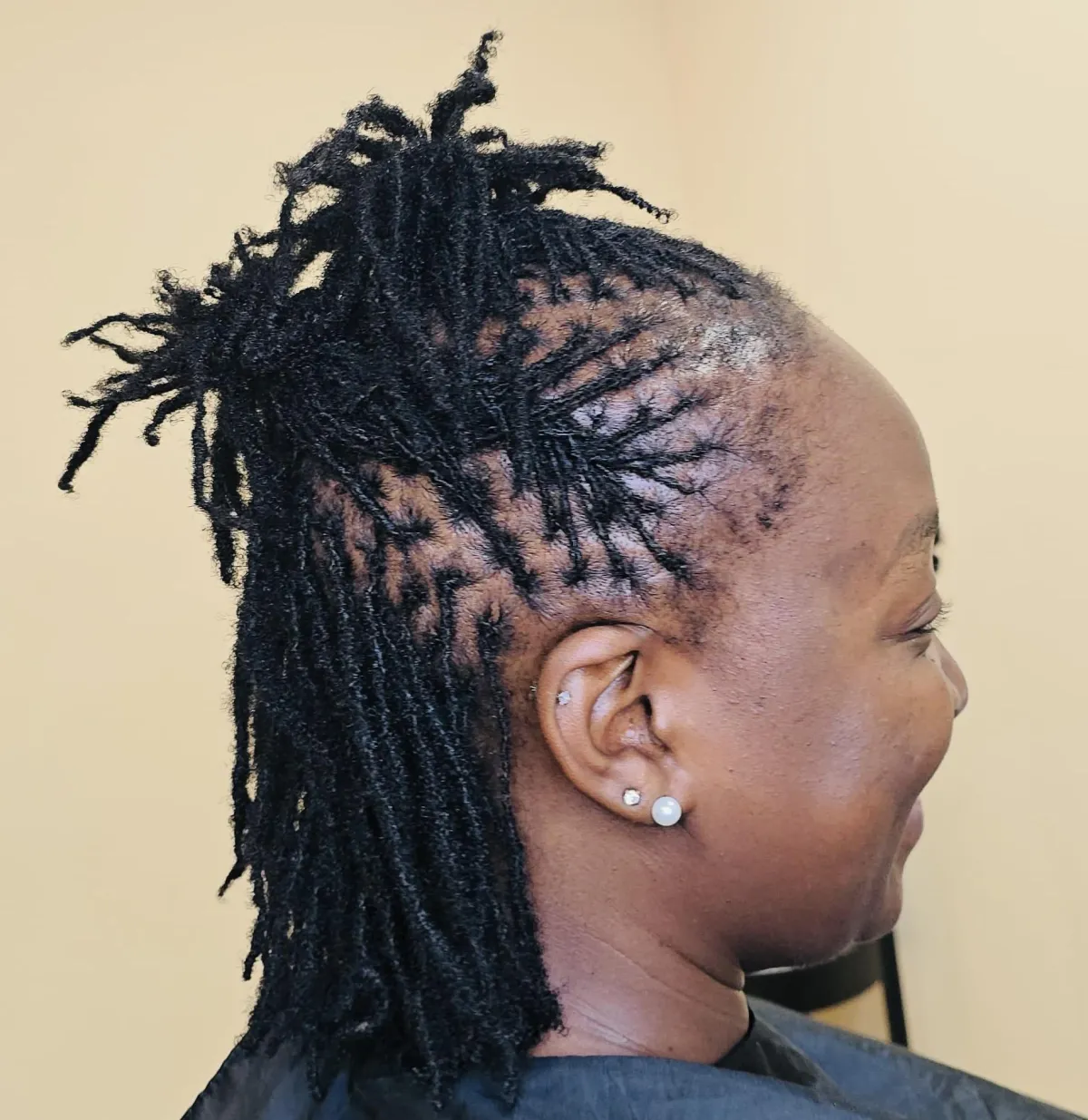
How Often Should You Retwist Your Locs?
How Often Should You Really Retwist Your Locs?
How often should I retwist my locs? This has to be one of the most Googled questions in the entire natural hair community. Ask ten different people, and you will get ten completely different answers. Every four weeks. Every six weeks. Wait until you see two inches of new growth. Never do it too soon. Do it all the time.
It is confusing. And getting it wrong can actually cause real damage to your locs. Too little and they unravel. Too much and you are thinning your roots out without even realizing it.
Here is the real answer. And the real answer is that it depends. But we are going to break down exactly what it depends on so you can stop guessing.
Why Retwisting Actually Matters
A retwist, also called a retie or retightening, is when your loctician takes your new growth and reforms it into the base of your locs to keep everything neat, defined, and on track. Without regular retwisting, especially early on in your journey:
New growth can completely unravel your starter locs.
Roots get frizzy and undefined, and your locs start looking unkempt.
Different sections can start growing together and joining, which is really hard to fix.
Your locs lose their shape and become uneven over time.
But here is the other side of that coin. Retwisting too often causes its own set of problems. Thinning at the roots, traction alopecia, and breakage. The sweet spot is finding the right frequency for your locs and your lifestyle, specifically.
The Retwist Schedule by Loc Stage
Starter Locs (Months 0 to 6): Every Four Weeks
Baby locs need the most consistent love. Plan to come in every four weeks. Every retie appointment at this stage reinforces the shape and direction of each individual loc.
Here is the thing, though. If your roots look fuzzy between appointments, that does not automatically mean you need a retwist. A little frizz during the starter phase is not only normal, but it is also actually a sign your hair is starting to lock. Do not panic. Do not grab the twist gel. Wait for your scheduled appointment.
Budding Locs (Months 6 to 12): Every Four to Six Weeks
As your locs enter the budding phase, they get more established and can go a little longer between retwists. Aim for every four to six weeks. Your locs are thickening up and some new frizz and texture at this stage is totally expected.
Teenage Locs (Months 12 to 18): Every Four to Eight Weeks
The teenage phase gives you more flexibility. Some people stretch to eight weeks between appointments during this phase, though four to six weeks is still the most common sweet spot. Your loctician can advise you based on how quickly your hair grows and how much new growth you accumulate between sessions.
Mature Locs (18 Months and Up): Every Six to Ten Weeks
Mature locs are your reward for being consistent. At this stage, your locs hold their shape reliably, and the roots are not going to unravel on you. Most people with mature locs visit their loctician every six to eight weeks, though some people stretch it to ten or even twelve weeks with no issues.
Signs You Need a Retwist Sooner Than Scheduled
Your roots are noticeably loosened or starting to unravel.
Your locs are beginning to join or grow into each other at the root.
You have an event coming up, and you want your locs looking their best.
Your scalp feels itchy, congested, or overdue for a professional wash.
Signs You Are Retwisting Way Too Often
You notice thinning at the root of individual locs.
Your scalp feels sore or tender after appointments.
You can see hair breakage at the root.
Your locs feel uncomfortably tight right after a retie instead of just fresh and neat.
If any of those sound familiar, please bring it up with your loctician. Reducing your retwist frequency and switching to a gentler technique can help the affected areas recover. It is not too late to course correct.
Thinking about booking your next trip in Gaithersburg? Returning Triple Touch clients can book their maintenance appointment directly at tripletouchlocs.com. New client? Start with a consultation, virtual or in-store, and let Felicia set up your maintenance plan from scratch.
